I was reeling from Friday's attack on Paris. When I saw it on Dateline, I thought, "How could I have not heard about this on Social Media?" I hadn't quite connected that it was so new that it hadn't made it to Social Media when I was there (which was three or four hours before Dateline aired). Needless to say, when I got back on, my feed was covered with images of the Eiffel Tower Peace Sign and people's avatars in French Flag colors.
I love and support all of you for standing with France and don't want to diminish that by putting what I'm feeling into words.
What I'm feeling is that terrorism is a global problem. It harms everyone. It harmed the victims of the Paris attacks. It harmed Shiites in Baghdad and a family in Mount Hebron, the West Bank that same day. It has claimed victims in Lebanon, Cameroon, Chad, and, yes, Iraq; Egypt, Israel and Somalia have also been hit this month alone. Every lover of history and of art was hurt when ISIS / ISIL was destroying Mesopotamian Antiquities that can never be replaced.
In the US and throughout the world, we feel the impact of Terror every day, it seems. Terror is a global problem that hurts everyone. It even harms the terrorists, although they're too stubborn/hate-filled/fanatical to see what living with that constant level of hate is doing to them.
So, to recognize that terror is a global problem, I created the following images of the flags of the world, to try to show that we're all connected. My thanks to the US CIA (cia.gov) for providing images of the flags to the Public Domain.
The first is cropped close to the flags image, the second is in a square space.
I chose a gray background simply because none of the flags had a that gray in them, at least, not on the edges (and purple didn't seem appropriate for the statement).
I'm declaring these images to be in the Public Domain as well. I'm pretty sure that's all it takes. If you want to use one for any purpose, go ahead. But you should probably credit the CIA as the source of the flags.
Addendum: The squared image with black bands on top and bottom, symbolizes mourning over every loss of life, every human driven from his or her home, every priceless -- or not so priceless -- item destroyed by the intolerant.
Monday, November 16, 2015
Saturday, May 16, 2015
Friday, May 8, 2015
Gender Privilege isn't always what it's cracked up to be
Okay, let's get real. I am not going to sit here and pretend that men don't have it all over women in the United States (I don't live in other countries, so I'm not addressing their gender-privilege issues; I am, however, acknowledging that the Internet is a global thing). We do. We get better pay (statistically, if not in my personal recent experience). We are thought more highly of when we're in a position of power. Hell, our reputations are improved by the accusation that we've had sex. In a lot of ways, being a man is pretty awesome (sorry, ladies).
But I recently stumbled across a link on Facebook to this article: Proof of Male Privilege that lists various proofs of, well, male privilege, and I was taken a little aback by #4: that men can show skin. Oh, sure, he's talking about a man's ability to go home, throw on a pair of shorts, strip off his shirt, and go out for a jog, letting his nipples breath the fresh air.
My thoughts, however, immediately went to the workplace. Let's look for a moment at what's considered "Professional Dress" for men:
Please note: this is from an Internet Search for "professional dress". My professions have generally allowed jeans and a polo shirt, but this is more the standard for Professional Dress.
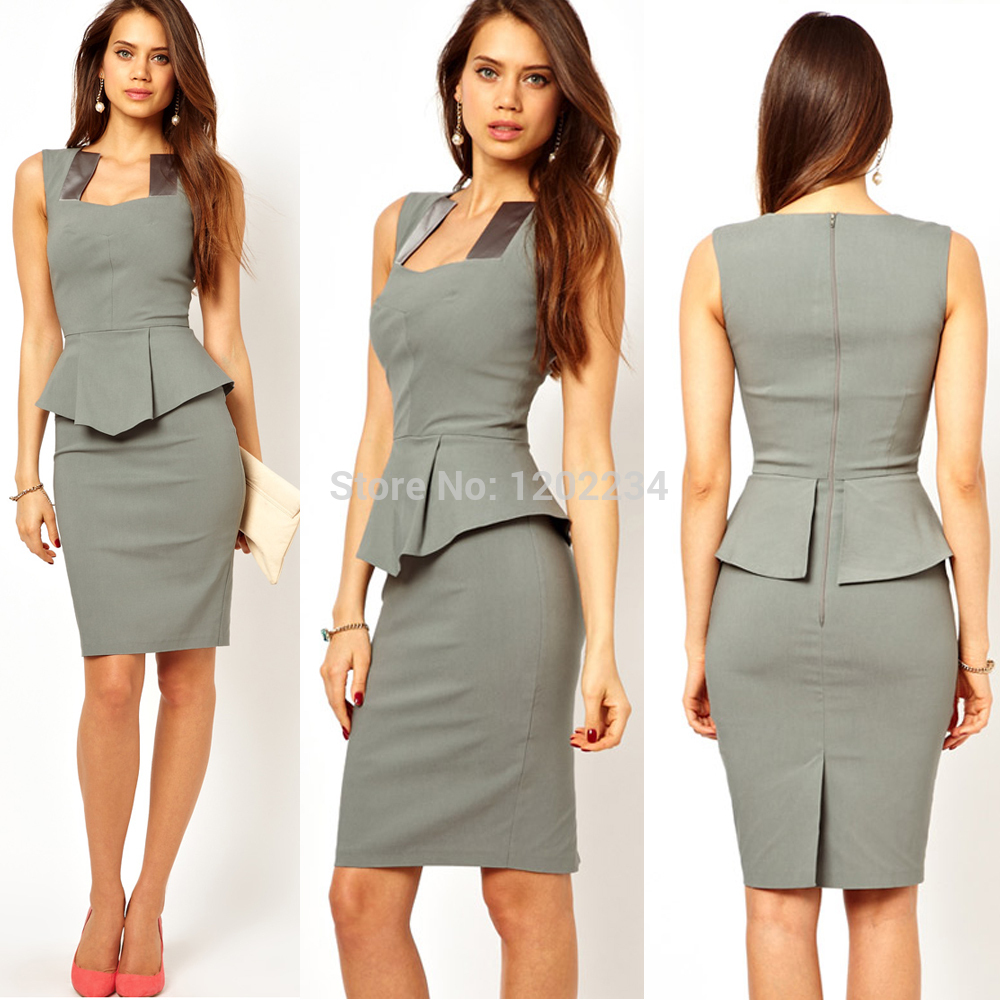
Now, let's look at professional dress for women:
Do you see what I see?
Like I said, I don't want to pretend that men don't live in a near-constant state of privilege around here, but there is one place where women have a distinct advantage, and that is dress. Not only can any of the women above go strolling through the city on a June day and enjoy the fresh air and sunshine on their arms and legs -- and in some cases, parts of their cleavage (oh, the poor man on the far right who has to run out in a heat wave in that three-piece monstrosity ;) ). but look what else women have.
Women have COLOR! Fuscia, ivory, aqua (not pictured), lavendar (np). And, of course, they can wear gray if they so desire. Men? Well, sure we have color choices. We can wear slate gray. Or we can wear charcoal gray. Or we can really get wild and crazy and go for NAVY! Nope, if a man wants color, to express his individuality, well, I suppose he has the tie.
I'd move on to beach wear, but I'm pretty sure that *is* a case of male privilege. With the teeny tiny beach wear I see available for women, it just screams that women are required to have large chests and itty-bitty waists, whereas men get to just take their shirts off. It was clearly designed by heterosexual males so they could ogle women, just like board shorts for men were designed so men wouldn't have to be accosted by each others' more private parts.
Anyway, before you go off in a rage about how I'm ignoring the very real ways that women are still subjugated, let me say again what I said at the beginning: Male Privilege definitely exists. The article I linked to at the beginning makes some real points about how advantaged we are. It's just that to say "We can show skin and they can't" is a little ... short-sighted. Also, please don't take me overly seriously here.
But I recently stumbled across a link on Facebook to this article: Proof of Male Privilege that lists various proofs of, well, male privilege, and I was taken a little aback by #4: that men can show skin. Oh, sure, he's talking about a man's ability to go home, throw on a pair of shorts, strip off his shirt, and go out for a jog, letting his nipples breath the fresh air.
My thoughts, however, immediately went to the workplace. Let's look for a moment at what's considered "Professional Dress" for men:
![]() | ![]() | ![]() |
Now, let's look at professional dress for women:
![]() |
Like I said, I don't want to pretend that men don't live in a near-constant state of privilege around here, but there is one place where women have a distinct advantage, and that is dress. Not only can any of the women above go strolling through the city on a June day and enjoy the fresh air and sunshine on their arms and legs -- and in some cases, parts of their cleavage (oh, the poor man on the far right who has to run out in a heat wave in that three-piece monstrosity ;) ). but look what else women have.
Women have COLOR! Fuscia, ivory, aqua (not pictured), lavendar (np). And, of course, they can wear gray if they so desire. Men? Well, sure we have color choices. We can wear slate gray. Or we can wear charcoal gray. Or we can really get wild and crazy and go for NAVY! Nope, if a man wants color, to express his individuality, well, I suppose he has the tie.
I'd move on to beach wear, but I'm pretty sure that *is* a case of male privilege. With the teeny tiny beach wear I see available for women, it just screams that women are required to have large chests and itty-bitty waists, whereas men get to just take their shirts off. It was clearly designed by heterosexual males so they could ogle women, just like board shorts for men were designed so men wouldn't have to be accosted by each others' more private parts.
Anyway, before you go off in a rage about how I'm ignoring the very real ways that women are still subjugated, let me say again what I said at the beginning: Male Privilege definitely exists. The article I linked to at the beginning makes some real points about how advantaged we are. It's just that to say "We can show skin and they can't" is a little ... short-sighted. Also, please don't take me overly seriously here.
Tuesday, January 29, 2013
100 Most Influential Albums? Why?
I've seen several people on Facebook taking a "100 Most Influential Albums" "quiz". And fool that I am, I commented to one of them, objecting to the whole thing ... because I'm opinionated that way. *g*
But really, never mind the fact that people think they need an app when a list would work just as well -- and who knows what else that app is doing while you're telling it what albums you have and don't have -- and giving it access to all of the personal information that Facebook demands that you provide it. Remember the days when we didn't put any personal information on the Internet because, "Who knows what kind of people are out there?" -- And never mind their use of the word "quiz" instead of "survey": quizzes have right and wrong answers, and really -- it's not *wrong* to not own Bob Dylan's Another Side of Bob Dylan.
This is just one problem with the quiz, which Citysound Bohemian conveniently posted here -- why run "some fool app" which is going to gather all of your personal information (because Facebook is fun that way) when the survey would have been just as well served by a list. Or if they really wanted to display a score, it could be done much more simply with a little bit of javascript.
That brings me to what's really wrong in this "quiz" -- I also saw a list here, "The 101 Most Influentual Albums in Rock 'n Roll History" and guess what? They don't agree. Why? Because they're the list-writers' personal opinions. And to both of them, I say, "Pfft!" Lots of 60s "classic rock" and "folk rock"; plenty of Bob Dylan, The Beatles and The Rolling Stones. But how many of those were influential? How many of them actually changed the face of music? And how many albums that did change the face of music were ignored because this person just doesn't like Pop? (Never mind that in 1964, the Beatles were pop.)
And where are the women? Okay, they did include women. But seriously, the "quiz" doesn't even include Carole King!They included Patti Smith, Laura Nyro and Joni Mitchell -- one album each -- but how about Aretha Franklin? How about Heart (Ann and Nancy Wilson)? How about Janice Joplin? Every pop diva since has credited Whitney Houston with being her inspiration. If that's not influence, I don't know what is.
They included plenty of the first British Invasion (of the 1960s) but what about the second? What about the "New Wave"? Where is the Disco era? Where is Rap? Don't like Disco and Rap? Well, guess what? Not all influences are good influences. If you're seriously going to list the 100 most influential albums, you're probably going to have to include albums you don't like and any "Influential Albums" list worthy of the name has got to include the Hues Corporation's Freedom for the Stallion, which made Disco popular, and Run-D.M.C's self-titled album, which brought rap to the mainstream. Justin Beiber's first album may have been loaded with garbage, but it was the first album to spawn from a "YouTube Sensation". Love it or hate it, it should be listed in any list of Most Influential Albums. Somebody started the Disco Era. Somebody also killed the Disco Era. Iblame credit Barbra Streisand for the album Guilty (because, really, if Streisand is doing disco, it's past its prime), but it would probably be more fair to say that Dance killed Disco. Maybe the credit should go to an album like the Fame soundtrack, so maybe it should be listed among the 100 most influential albums. Certainly something should.
Speaking of soundtracks, I think it's safe to say that the first movie soundtrack ever, and the first Broadway musical soundtrack ever can predate whatever influential list you want to make ... otherwise, you're going to get bogged down in Beethoven, Bach and Brahms. But in the early 1980s, something changed in the movie soundtrack industry. Before 1980, movies had a theme song, but to have a musical, the cast broke into song. Now, movies are just loaded with song after song so that the movie makers can have a soundtrack album without someone asking, "Why are New York City gang members singing and dancing?" The transition may have began with A Chorus Line and the aforementioned Fame, where it actually made sense for the characters to sing, but the most influential album of the New Musicals was probably Flashdance. The story of an exotic dancer who wants to go to "serious dance school" bridges the gap from A Chorus Line and Fame to Beverly Hills Cop and Top Gun (and more) where music serves as a background to the action. Plus, it predates Footloose by 1 year.
The first Backstreet Boys album should be on the list, since it started the Boy Band craze -- even if The Beatles and various other mop-topped bands of the 60s started out as boy bands -- but including them won't please the folk/rock fans the list writer was trying to appeal to.
Where would Blake Shelton, Taylor Swift and Carrie Underwood be today if Kenny Rogers, Eddie Rabbit, Dolly Parton and Crystal Gayle hadn't opened the pop charts to country music in the early 1980s? But which one makes the "most influential" list? Well, Kenny Rogers' The Gambler and Eddie Rabbit's The Best of Eddie Rabbit (which started his cross-over success with the single "Every Which Way But Loose") both came out in 1978. Dolly Parton's Here You Come Again came out in 1977. Crystal Gayle's We Believe In Magic came out the same year, but is credited as the first album by a female country artist to go platinum. But in 1976 (the first year platinum albums were designated), The Outlaws' Wanted was certified platinum. (The Outlaws were Willie Nelson, Waylon Jennings, and Jessi Colter in case you were wondering). Of course, I wouldn't object to having two country albums on a list of The Most Influential, especially since Gayle shattered Country's "glass ceiling" so darn quickly, so she gets the female credit. Alas, reviews say that Wanted is not a very good album -- but as I said before, we're talking influence here, not good music.
So, really, "influential" doesn't mean good, and "influential" doesn't mean you want it, so who cares how many truly influential albums you own. Like Citysound Bohemian said, buy what you like and listen to what you like, and if you want to know what influenced the music industry? Go for it. There's a world of Internet sites out there to tell you what influenced the music industry. And if you don't have all those albums, it may just mean that you have good taste.
This is just one problem with the quiz, which Citysound Bohemian conveniently posted here -- why run "some fool app" which is going to gather all of your personal information (because Facebook is fun that way) when the survey would have been just as well served by a list. Or if they really wanted to display a score, it could be done much more simply with a little bit of javascript.
That brings me to what's really wrong in this "quiz" -- I also saw a list here, "The 101 Most Influentual Albums in Rock 'n Roll History" and guess what? They don't agree. Why? Because they're the list-writers' personal opinions. And to both of them, I say, "Pfft!" Lots of 60s "classic rock" and "folk rock"; plenty of Bob Dylan, The Beatles and The Rolling Stones. But how many of those were influential? How many of them actually changed the face of music? And how many albums that did change the face of music were ignored because this person just doesn't like Pop? (Never mind that in 1964, the Beatles were pop.)
And where are the women? Okay, they did include women. But seriously, the "quiz" doesn't even include Carole King!They included Patti Smith, Laura Nyro and Joni Mitchell -- one album each -- but how about Aretha Franklin? How about Heart (Ann and Nancy Wilson)? How about Janice Joplin? Every pop diva since has credited Whitney Houston with being her inspiration. If that's not influence, I don't know what is.
They included plenty of the first British Invasion (of the 1960s) but what about the second? What about the "New Wave"? Where is the Disco era? Where is Rap? Don't like Disco and Rap? Well, guess what? Not all influences are good influences. If you're seriously going to list the 100 most influential albums, you're probably going to have to include albums you don't like and any "Influential Albums" list worthy of the name has got to include the Hues Corporation's Freedom for the Stallion, which made Disco popular, and Run-D.M.C's self-titled album, which brought rap to the mainstream. Justin Beiber's first album may have been loaded with garbage, but it was the first album to spawn from a "YouTube Sensation". Love it or hate it, it should be listed in any list of Most Influential Albums. Somebody started the Disco Era. Somebody also killed the Disco Era. I
Speaking of soundtracks, I think it's safe to say that the first movie soundtrack ever, and the first Broadway musical soundtrack ever can predate whatever influential list you want to make ... otherwise, you're going to get bogged down in Beethoven, Bach and Brahms. But in the early 1980s, something changed in the movie soundtrack industry. Before 1980, movies had a theme song, but to have a musical, the cast broke into song. Now, movies are just loaded with song after song so that the movie makers can have a soundtrack album without someone asking, "Why are New York City gang members singing and dancing?" The transition may have began with A Chorus Line and the aforementioned Fame, where it actually made sense for the characters to sing, but the most influential album of the New Musicals was probably Flashdance. The story of an exotic dancer who wants to go to "serious dance school" bridges the gap from A Chorus Line and Fame to Beverly Hills Cop and Top Gun (and more) where music serves as a background to the action. Plus, it predates Footloose by 1 year.
The first Backstreet Boys album should be on the list, since it started the Boy Band craze -- even if The Beatles and various other mop-topped bands of the 60s started out as boy bands -- but including them won't please the folk/rock fans the list writer was trying to appeal to.
Where would Blake Shelton, Taylor Swift and Carrie Underwood be today if Kenny Rogers, Eddie Rabbit, Dolly Parton and Crystal Gayle hadn't opened the pop charts to country music in the early 1980s? But which one makes the "most influential" list? Well, Kenny Rogers' The Gambler and Eddie Rabbit's The Best of Eddie Rabbit (which started his cross-over success with the single "Every Which Way But Loose") both came out in 1978. Dolly Parton's Here You Come Again came out in 1977. Crystal Gayle's We Believe In Magic came out the same year, but is credited as the first album by a female country artist to go platinum. But in 1976 (the first year platinum albums were designated), The Outlaws' Wanted was certified platinum. (The Outlaws were Willie Nelson, Waylon Jennings, and Jessi Colter in case you were wondering). Of course, I wouldn't object to having two country albums on a list of The Most Influential, especially since Gayle shattered Country's "glass ceiling" so darn quickly, so she gets the female credit. Alas, reviews say that Wanted is not a very good album -- but as I said before, we're talking influence here, not good music.
So, really, "influential" doesn't mean good, and "influential" doesn't mean you want it, so who cares how many truly influential albums you own. Like Citysound Bohemian said, buy what you like and listen to what you like, and if you want to know what influenced the music industry? Go for it. There's a world of Internet sites out there to tell you what influenced the music industry. And if you don't have all those albums, it may just mean that you have good taste.
Monday, June 11, 2012
Freedom of Speech? Depends on the Speech
There is a word in this post that some
might find offensive. Whatever. If you're not grown up enough to see
the word religion Jesus penis
in a blog post, then just ... find another blog to read or play Angry
Birds or something.
A friend on line recently posted a
picture of a billboard that said, "Religion is like a penis.
It's okay to have one. It's okay to be proud of it. But don't go
waving it around in public." I find it seriously odd that the
same people who are usually first to defend our rights are so quick
to try to subvert them when it comes to religion.
(I don't find it nearly as odd when the
people who are first to try to defend their religion are so quick to
try to subvert our rights when it comes to everything else. That's
"show biz".)
I live in a great country ... or what
should be a great country: The United States of America. It was
founded on a set of principles found in The United States
Constitution and The Bill of Rights (first 10 amendments to the
Constitution). The first of those rights is, "Congress shall
make no law respecting an establishment of religion, or prohibiting
the free exercise thereof; or abridging the freedom of speech, or of
the press; or the right of the people peaceably to assemble, and to
petition the Government for a redress of grievances." Now,
first, yes, the amendment is that Congress shall
make no law... but still, the principle is that an individual -- any
individual -- has the freedom to express himself or herself, to
believe what he or she wants to believe, etc, etc.
So, there are a bunch of people who
believe that abortion is wrong, that homosexual sex is wrong, that
contraception is wrong ... and some of this group even believe that
women working is wrong. And let's not limit this to the "God
hates gays" crowd**. There are also plenty of people who at
least claim that someone being gay doesn't bother them, that they
just don't want it "shoved in their faces." You know what?
This is America*. Whatever they believe, they don't have the right to
pass laws forcing those beliefs on the rest of you (or, as the case
may be, us). You have the right (via Roe v Wade) to terminate a
pregnancy. I have the right to smooch my boyfriend
same-sex relationship in public (yeah, if only) and if you're a
woman, you have the right to work. You should have the right to equal
pay, but we haven't managed to get that law passed, so ... good luck
with that *sigh*.
But you know what? Because this is
America, THEY have the right to believe that abortion is wrong, that
homosexual sex is wrong, that contraception is wrong. And they even
have the right to express that belief. What they don't have the right
to do is force you to believe what they believe. They do have the
right, however, to tell you what they believe.
But the same people who are defending
my right to hold hands with my boyfriend same-sex
relationship (see above in re "if only") -- because I
should have the freedom of expression in the face of those who say I
am "flaunting my sexuality" -- will claim that these people
don't have the right to flaunt their religion and should ... keep it
in their pants. People have even told me, "But your sexuality
isn't a choice." When did the Freedom of Expression start only
applying to things we have no choice over? Also, if you can't control
who you hold hands with in public, then ... there are treatment
centers that may be able to help. Seriously, I'm actually all for
public displays of affection (well... mostly for, anyway) but there's
a name for not being able to control what your hands do, and it
usually requires medication.
In the movie, The American
President, President Andrew Shepherd, played by Martin
Sheen says (in part), "You want to claim this land as the land
of the free? Then the symbol of your country can't just be a flag;
the symbol also has to be one of its citizens exercising his right to
burn that flag in protest." Well, for you liberals out there,
you want to claim this land as the land of the free? Then the symbol
of your country can't just be one of its citizens exercising his
right to burn that flag in protest. It also has to be someone
exercising his or her right to say something you find repugnant.
The freedom of speech is a great and
wonderful thing, but it has to be applied equally to all. If someone
is saying something that you find offensive, sure, you have the right
to be offended. You have the right to say that you're offended. You
even have the right to tell that person he or she is wrong. Heck,
tell the whole world that person is wrong. This is America*! But you
don't have the right to prevent that person from saying his offensive
thing. This is America*.
And while we're at it, let's be clear
on the difference between "Freedom of religion" and
"Freedom from religion". The United States Constitution
guarantees freedom of religion. You want to
believe Jesus is the Only Way? You have that right. You want to
believe the universe was created by The Spaghetti Monster? You have
that right. You want to believe nothing at all? You have that right.
But when someone comes up to you and tells you that Jesus is the Only
Way, they are not infringing on your right to
believe in the Spaghetti Monster. If someone comes up to you and
says, "You're going to hell," it doesn't mean that you are.
... It doesn't mean you aren't, either, let's just be clear on that.
It just means that that person is rude. And you have every right to
tell that person that he or she is being rude. Because this is
America*.
And if that person tells you, "I'm
just telling you what I believe" -- doubtful that they'd be that
insightful, but let's go with it -- well, they have every right to
believe it. They even have every right to be rude in their expression
of what they believe. Because this is America*. Rudeness is protected
speech under the US Constitution. But you know what? When you tell
people, "You can't go up to people and tell them that Jesus is
the only way because it's rude," ... well, you may have the
right to say that, but you're wrong. You're now
infringing on their right to freedom of both
speech and religion.
*Apologies to those of you for whom
this is not America, but for me it is.
**God doesn't hate gays, but that's
another blog post. ... And you can read it here.
Tuesday, May 8, 2012
If all Superheroes dressed like Wonder Woman
There's a picture floating around Facebook where Wonder Woman says, "If I don't get pants, no one gets pants." ... now let's see if I can link to that picture. https://fbcdn-sphotos-a.akamaihd.net/hphotos-ak-ash3/545803_419539401398843_100000283604812_1543425_1291662531_n.jpg
While I appreciate the artist's efforts and intent, I think she kind of missed the boat here. Putting Wonder Woman in a ludicrous outfit wasn't an effort to humiliate her (a la Green Lantern's skirt). It was an attempt to turn her into a sex object --- complete with a bustier that in reality, if she were to fight, there's no way her boobs would stay inside that thing. The question the artist should have asked herself was not "What would embarrass a man?" but rather, "What outfits would turn a man into the same ludicrous level of sex-object?"
Or to put it less delicately, since Wonder Woman looks dressed more for porn than for fighting crime, how would we dress the male superheroes for porn? Oh, but not straight porn. Everybody knows straight porn is as aimed toward straight men as comic books are. How would we dress male superheroes for gay porn?
So, I give you ...
Enjoy, ladies! And, crime-fighters, watch out for chaffing.
While I appreciate the artist's efforts and intent, I think she kind of missed the boat here. Putting Wonder Woman in a ludicrous outfit wasn't an effort to humiliate her (a la Green Lantern's skirt). It was an attempt to turn her into a sex object --- complete with a bustier that in reality, if she were to fight, there's no way her boobs would stay inside that thing. The question the artist should have asked herself was not "What would embarrass a man?" but rather, "What outfits would turn a man into the same ludicrous level of sex-object?"
Or to put it less delicately, since Wonder Woman looks dressed more for porn than for fighting crime, how would we dress the male superheroes for porn? Oh, but not straight porn. Everybody knows straight porn is as aimed toward straight men as comic books are. How would we dress male superheroes for gay porn?
So, I give you ...
Superman
(note that in none of these have I removed the original logo and replaced it with Wonder Woman's. That was just silly.)
Batman
(Sorry, Bats: WW doesn't get a mask, so neither do you. I hope you like your bat-ear tiara.)
Aquaman
(Okay, so Aquaman's costume isn't that different from your typical Olympic swimmer. Except the silly gloves.)
All 4 Green Lanterns of Earth (or rather, space sector whatever-it's-called *g*)
And I threw in Captain Marvel
(trademarked as Shazam! because Marvel comics also has a Captain Marvel. Note the lightning bolt cut-out in the center of the chest, a la Power Girl. [look it up] *g*)
And Nightwing (aka Dick Grayson, who used to be Batman's original Robin.)
Enjoy, ladies! And, crime-fighters, watch out for chaffing.
Subscribe to:
Posts (Atom)